South Jersey IOP for substance abuse
Most people call us about our intensive outpatient program in Berlin, NJ after something has already gone wrong. A relapse after thirty days away. A DUI. A conversation at home that ended with someone packing a bag. The question they ask is whether IOP will be enough.
The better question is what happens in the hours you are not in treatment. That is what this level of care is built around. You walk past the bar, or the old friend, or the empty evening that used to be the problem, and then you bring what happened back to group.
South Jersey Recovery Program is an outpatient provider. IOP sits in the middle of what we run, between partial care, which is five days a week, and standard outpatient, which is usually one or two sessions a week.
| Level of care | Schedule | Clinical hours a week | ASAM level | Where you sleep |
|---|---|---|---|---|
| Partial care (PHP) | Monday to Friday, 8:30 a.m. to 4 p.m. | 20 or more | 2.5 | At home |
| Intensive outpatient (IOP) | Weekday mornings, 9:30 a.m. to 12 p.m.; no evening track | 9 to 19 | 2.1 | At home |
| Outpatient (OP) | One or two sessions a week, daytime | Fewer than 9 | 1.5 | At home |

What is intensive outpatient?
An intensive outpatient program is a defined level of care, not a description of how hard you are trying. Under the ASAM Criteria, the placement standard most insurers use to decide medical necessity, IOP is Level 2.1: 9 to 19 hours of structured clinical service a week for adults, delivered while the person lives in the community.
Our IOP sessions run 9:30 a.m. to noon. Most people start at five days a week, which is 12 and a half hours, and step down to three days once the week is holding, then to standard outpatient for continuing care.
When you step down is a clinical decision made with you and with your insurer, not a date set at intake.

It is not weekly counseling with a better name. Ninety minutes on a Thursday gives you one look at a week you have already forgotten most of. A morning in the room most weekdays means you are never more than a day or two from the next time someone asks you directly how the last two days went.
The weekend is the longest gap, which is exactly why relapse-prevention planning spends so much time on it.
It is also not residential treatment with a shorter day. The curriculum overlaps. The responsibility does not. In a residential program, staff hold your evenings. In IOP, you do. That is the distinction, and it is the reason this level of care works well for some people and fails others.
The benefits of intensive outpatient treatment, and the limits
What IOP gives you is repetition inside your real life.
- You stay in your own home and keep your custody arrangement instead of explaining a thirty-day absence.
- Several hours a week of group and individual clinical work, enough to build a skill rather than talk about one.
- You practice the skill the same night where you will need it. If it does not hold, you have a clinician the next morning rather than a discharge summary six weeks later.
- A room full of people whose excuses sound exactly like yours. That is uncomfortable, and it is most of the value of group therapy.
- Cost well below residential care, because you are not paying for a bed, meals and overnight staffing.

Many commercial plans cover intensive outpatient as a behavioral health benefit, but whether yours does, what it authorizes, and what you owe depend entirely on your plan.
We verify your benefits and tell you the actual numbers, including what your plan will not cover, before you commit to a start date.
Now the limits, because they decide whether this works. Nobody is watching you at 11 p.m. Your access to alcohol or drugs is unchanged on day one. If the house you go home to is where the using happens, or the person who supplies you lives there, IOP is starting you in a hole.
Say that out loud during your assessment. It changes the recommendation, and sometimes it changes it toward a different provider entirely.
Who can benefit from a South Jersey IOP
IOP tends to be the right call in three situations.
- Stepping down from a higher level of care. You finished detox somewhere, or residential treatment, or our partial care program, and you are stable but not ready for one appointment a week. This is the most common path into IOP, and the most important one not to skip.
- Instead of residential treatment. You need real structure, but you are medically stable, you have somewhere safe to sleep, and leaving for a month would cost you the job or the children you are trying to keep. Plenty of people do well here. It requires honesty about the home environment.
- Early, before the worst of it. Use is escalating, work has noticed, your partner has stopped believing you, but you have not lost the things that make a return to normal life possible. Treatment is easier at this stage. Almost nobody starts here, which is a shame.
When IOP is not where you should start
Some situations need a different level of care first, and we will tell you so at assessment rather than admit you and hope.
If you are physically dependent on alcohol or on benzodiazepines such as Xanax, Klonopin or Ativan, stopping on your own can be dangerous. Withdrawal from those two drug classes can cause seizures and delirium, and it can be fatal without medical management.
That calls for medically supervised withdrawal first. We do not provide detox or residential treatment. We help arrange detox with a provider that does, and we take you into IOP when you come out.
If you are in immediate danger, call 911. If you are having thoughts of suicide, call or text 988. If someone is unresponsive, not breathing normally, or may have overdosed, call 911 first, then give naloxone if you have it, and stay with them until help arrives. Our phone line is an admissions line, not a crisis line, and it is staffed Monday through Friday.
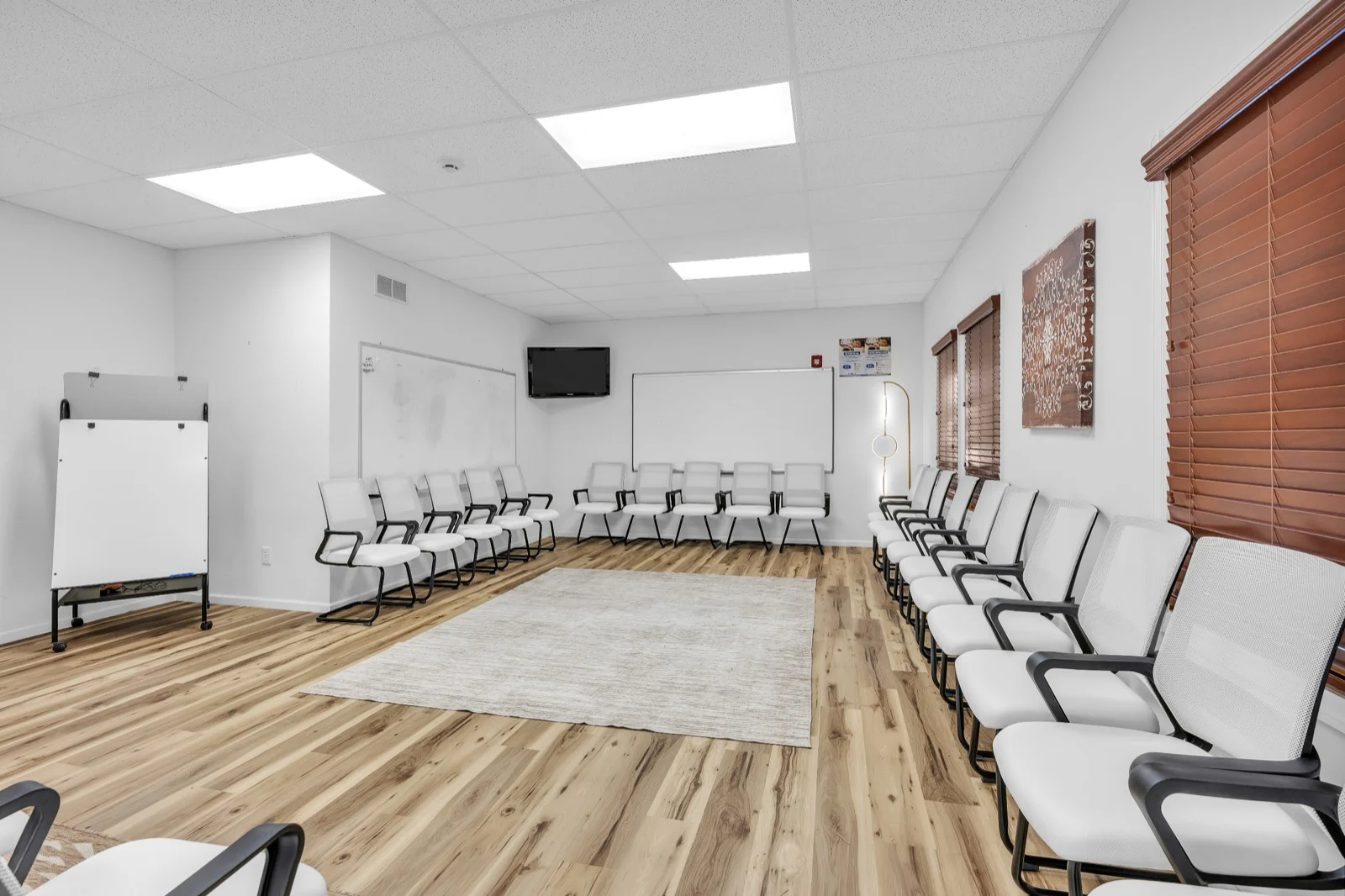
What to expect during an intensive outpatient program in Berlin, NJ
IOP here runs 9:30 a.m. to noon. Most people start at five days a week and step down to three, then to outpatient.
Our office is open Monday through Friday, 9 a.m. to 5 p.m., clinical staff are on site 8:30 a.m. to 4:30 p.m., and partial care, the level above this one, runs 8:30 a.m. to 4 p.m.
A week generally includes:
- Process groups, where the work is what actually happened since the last session
- Skills groups built on CBT for the thinking patterns and DBT for the emotional swings that precede most relapses
- Individual therapy with your primary clinician, which is where trauma history and co-occurring conditions get addressed
- Relapse prevention planning that names your specific triggers, your specific high-risk hours, and who you call
- Family sessions when the household is part of the picture, which it usually is
- Medication management, including medication-assisted treatment for opioid or alcohol use disorder where it is appropriate
One note on medication, because people arrive with the wrong assumption. Buprenorphine alongside IOP is not a crutch bolted onto real treatment. For opioid use disorder the medication is the part with the strongest evidence behind it: time on buprenorphine or methadone is associated with roughly half the death rate of time off it.
Here, medication and counseling run together: everyone on medication also has individual and group therapy as part of the same plan.
IOP as part of the step-down continuum of care
Levels of care are supposed to descend in a line, and the transitions are where people fall out.
How the levels step down
Partial care (PHP) is our most structured level: roughly five days a week, most of the day, for people who need clinical contact to be the default setting rather than an appointment.
Intensive outpatient (IOP) is the middle. Fewer hours, more of your own life back, the same clinical team. There is a step down inside this level too: five days a week at the start, three once the week is holding, and then outpatient.
Outpatient (OP) is where most of the long work happens. One or two sessions a week, continuing for months, catching problems while they are still small.
Why the transitions matter
The reason to care about the sequence is that the risk does not end when the structure does. It concentrates there. Discharge from a residential program or a detox unit, the first week in IOP, the first week after IOP ends: those are the moments people describe afterward as the point where it slipped.
Tolerance falls quickly during any period of abstinence. Going back to the dose you used before you stopped is how overdoses happen to people who used the same amount safely a month earlier.
If there is any chance you or someone in your house uses opioids, keep naloxone in the house and make sure another person knows where it is and what to do.
New Jersey pharmacies dispense naloxone without a prescription, and anyone 14 or older can get it free and anonymously through the state’s Naloxone365 program.
Is this the IOP near Cherry Hill, Voorhees or Marlton?
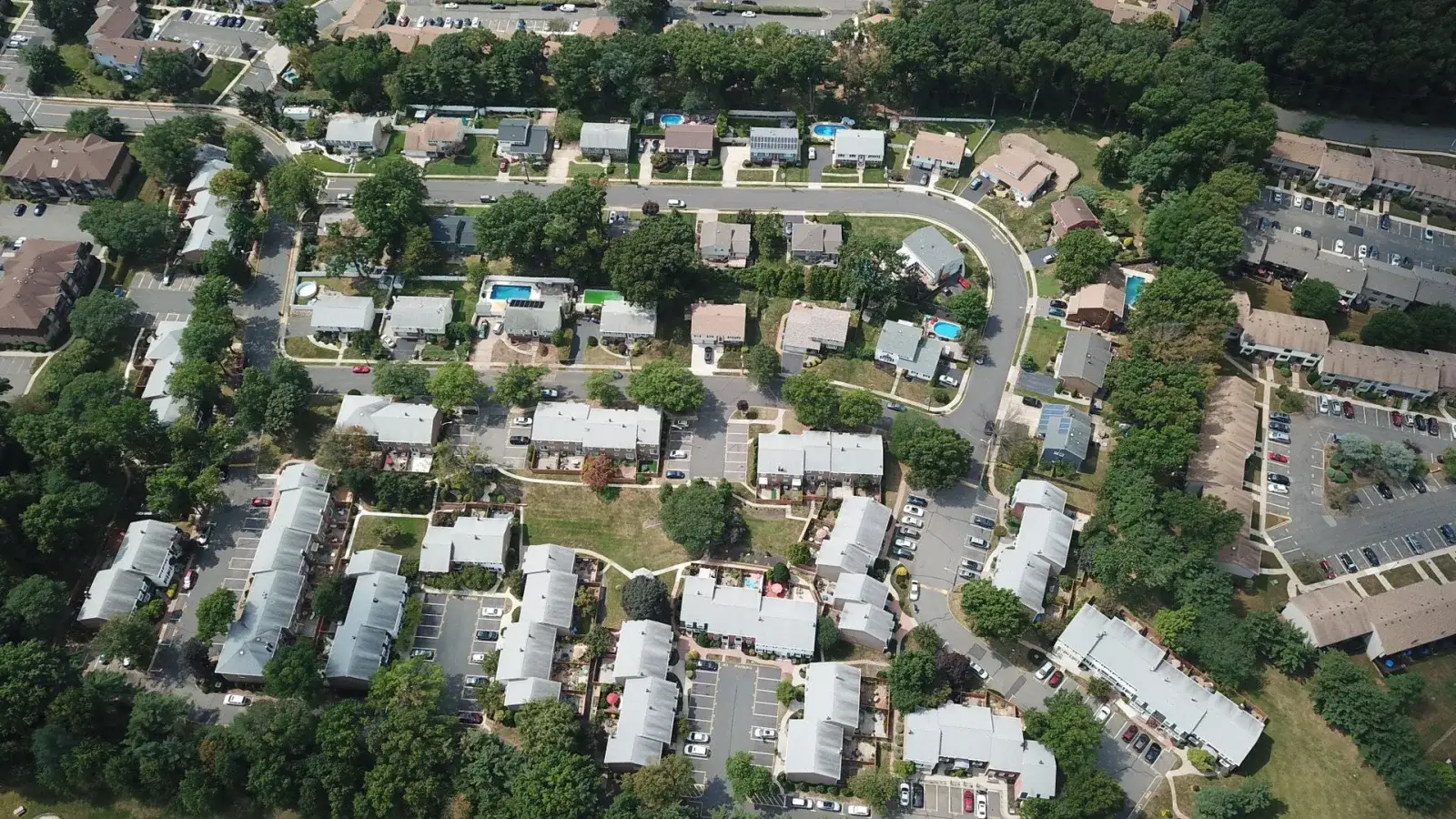
Yes. South Jersey Recovery Program has one office, at 1044 NJ-73 in Berlin, and most IOP clients drive in from Camden, Gloucester and Burlington County towns.
It is 10 to 14 miles from Cherry Hill, about six miles from Voorhees and Sicklerville, eight miles down Route 73 from Marlton, and one train stop from Lindenwold. Each town page has the drive, the bus or train, and what the state’s admissions data shows for that township.
Start IOP in Berlin, NJ with South Jersey Recovery Program
If you are not sure IOP is the right level of care, that is a normal place to be starting from, and it is the thing an assessment is for.
Call us at (856) 788-6914 or send a message. A licensed clinician goes through your substance use history, your mental health history, your medical situation, and what your week actually looks like.
The consultation is confidential, it usually takes 20 to 30 minutes on the phone, and there is no obligation attached to it. You can read the whole admissions process before you call if you would rather know what is coming.
If the assessment says you need detox first, or a level of care we do not provide, we will say so and help you get there. Admitting someone to a program that cannot meet their needs helps nobody. Our intensive outpatient program in Berlin, NJ is for the people it fits, and the call is how we find out.